




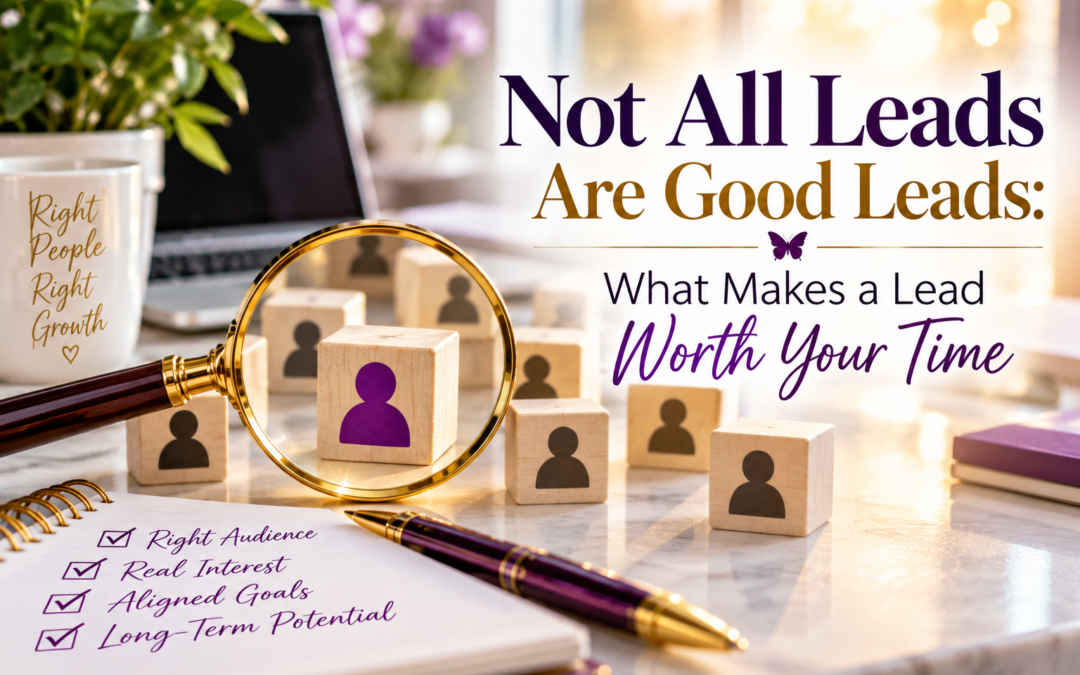
Not all leads are good leads. A smaller list of the right people will almost always outperform a large list of the wrong ones.
After more than 25 years in marketing, I’ve watched countless business owners, authors, and entrepreneurs measure success by the size of their list. More followers. More sign-ups. More names in the database. It feels like progress, and in some ways it is.
But a lead is only valuable if it has the potential to become a real relationship, whether that’s a reader, a client, a partner, or a referral source. So the real question isn’t “How do I get more leads?” It’s “What makes a lead worth my time?”
The Hidden Cost of Chasing Every Lead
Every lead you pursue costs something. It takes time to follow up, energy to build rapport, and often money to attract them in the first place.
When those resources go to people who were never a good fit, the cost adds up quickly. Follow-up emails go unanswered. Discovery calls lead nowhere. Proposals sit unread. Over time, that can leave you feeling discouraged, as though your marketing isn’t working, when the real issue is that you’re talking to the wrong people.
The good news is that once you know what a good lead looks like, you can spend less time chasing and more time connecting.
Six Signs of a Good Lead
1. They have a real need you can solve
A good lead has a problem, goal, or interest that lines up with what you actually deliver. If your book, service, or program doesn’t meet a genuine need for them, no amount of follow-up will change that.
2. They fit your ideal audience
The best leads look like the reader or client you had in mind when you built your offer. If you haven’t defined that person clearly, start there. It’s much easier to recognize the right lead when you know exactly who you’re looking for.
3. They’re ready, or getting ready, to act
Timing matters. Someone who is simply curious today may be ready next season, and that’s fine. But a good lead is moving toward a decision, not just browsing.
4. They have the means to invest
Every offer requires something, whether it’s money, time, or commitment. A good lead is in a position to follow through. Interest without the ability to act rarely turns into results.
5. They engage
Engagement is one of the clearest signs of genuine interest. Good leads open your emails, ask questions, comment on your posts, and respond when you reach out. Silence, on the other hand, usually tells you something too.
6. There’s mutual fit
This one is often overlooked. The best leads are people you actually want to work with, and who value what you bring. When the fit goes both ways, the relationship is easier, more rewarding, and far more likely to produce referrals.
How to Attract Better Leads
Knowing what a good lead looks like is only half the equation. The other half is shaping your marketing so the right people find you in the first place.
- Speak directly to your ideal audience. Clear, specific messaging attracts the right people and gently filters out the wrong ones.
- Lead with value. Articles, free resources, and helpful posts draw in people who are genuinely interested in what you offer.
- Ask good questions early. A few thoughtful questions at the start of a conversation reveal quickly whether there’s a real fit.
- Nurture, don’t push. Leads who aren’t ready today may be ready next season. Staying in touch keeps you top of mind without pressure.
- Track where your best clients come from. Your strongest relationships leave clues. Invest more in the channels that bring them.
Quality Over Quantity
Chasing every lead can drain your energy and your budget. Focusing on the right ones frees you to build genuine relationships that turn into loyal readers, long-term clients, and referrals that bring in even more of the right people.
A smaller, well-matched audience isn’t a limitation. It’s a foundation.
Now I’d love to hear from you: What’s your definition of a good lead? And how do you tell the difference between someone who’s truly interested and someone who’s just browsing? Share your thoughts in the comments.

